Robotic-Assisted Surgery

Why Robotic Surgery?

A new generation of precision for delicate urological and oncological procedures — combining the surgeon's expertise with 3D magnified vision and instruments that move beyond the limits of the human hand.
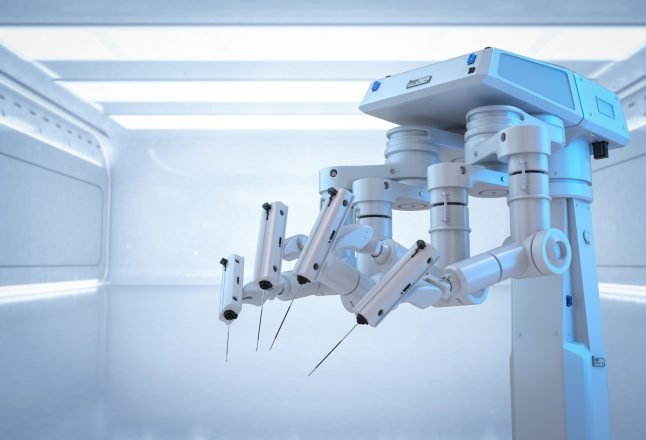
Robotic Surgery

Robotic-assisted surgery provides precision, control and magnified 3D vision for the most delicate procedures of the urinary tract and pelvis.

Faster Recovery

Minimally invasive technique means less pain and a quicker return to daily life.

Reduced Blood Loss

High-definition 3D vision and precise instruments minimise bleeding.

Enhanced Precision

Wristed instruments offer a greater range of motion and tremor-free stability.

Smaller Incisions

Tiny keyhole openings mean minimal scarring and lower infection risk.

See it in motion

Precision, Demonstrated

The robotic system doesn't simply mirror the surgeon's hand — it refines it. Move your cursor across the left panel and watch the instrument tip on the right respond with motion scaling and tremor filtration in real time.

Console-side
Surgeon's Hand
Raw input · 1:1
Patient-side
Instrument Tip
Scaled 2.5:1 · Smoothed
A few centimetres of hand movement become a few millimetres of instrument movement — steady, scaled, and tremor-free.
Motion Scaling

Large, comfortable hand movements at the console are translated into much smaller, more precise instrument movements inside the patient.

Tremor Filtration

High-frequency hand tremor — present in even the steadiest surgeons — is filtered out in real time before reaching the instrument.

7 Degrees of Freedom

Wristed instrument tips bend and rotate like a human wrist — well beyond the range of straight laparoscopic tools.

An interactive atlas

Procedures, Mapped to Anatomy

Tap an organ — or pick a procedure below — to see the robotic approach, port placement on the abdomen, recovery profile, and the structures we work hardest to preserve.

Anatomy
Front view
Adrenal glands Kidneys Ureters Bladder Prostate
How it compares

Robotic vs. Traditional Surgery

How robotic-assisted surgery compares with open and conventional laparoscopic approaches for typical urological procedures.

Parameter Open Surgery Laparoscopy Robotic
Incision size 15–25 cm 3–4 small ports 4–5 keyhole ports
Blood loss Often significant Reduced Minimal
Hospital stay 5–7 days 3–4 days 2–3 days
Recovery to routine 6–8 weeks 3–4 weeks 2–3 weeks
Visualisation Direct, 2D 2D screen 3D HD, 10× magnified
Instrument dexterity Surgeon's hands Limited (rigid) 7 degrees of freedom

*Indicative ranges. Actual outcomes vary by procedure, patient and clinical condition.

Patient journey

Your Surgical Journey

From the first consultation to your full recovery — a clear, supported pathway at every step.

01

Consultation

Detailed assessment, history and review of imaging or biopsy reports.

02

Diagnostics

Additional MRI, CT, PET-CT or labs as required — staged and explained clearly.

03

Planning

Individualised surgical plan with informed consent and pre-operative optimisation.

04

Surgery

Robotic-assisted procedure performed in a fully equipped, accredited centre.

05

Recovery

Structured follow-up, rehabilitation and long-term surveillance where needed.

By the numbers

A Practice Built on Experience

Decades of dedicated experience in robotic urology and uro-oncological surgery.

25+
Years of Experience
5000+
Surgeries Performed
98%
Patient Satisfaction
15+
Robotic Procedures
Questions, answered

Frequently Asked Questions

Common questions about robotic-assisted surgery — answered clearly and honestly.

Does the robot perform the surgery on its own? +

No. The robot has no autonomy. Every movement of every instrument is controlled in real time by the surgeon, who sits at a console and operates with hand and foot controls. The system translates the surgeon's movements into smaller, tremor-filtered actions.

Is robotic surgery safer than open surgery? +

For the procedures we perform, robotic surgery is generally associated with lower blood loss, fewer wound complications, less post-operative pain and shorter hospital stay. Oncological and functional outcomes are at least equivalent to open surgery in experienced hands. The right approach is always patient-specific and discussed during consultation.

How long is the recovery? +

Most patients are discharged within 2–3 days. Light activity resumes within a week, and most patients return to full routine activity within 2–3 weeks. Heavy lifting and strenuous exercise are typically avoided for 4–6 weeks, depending on the procedure.

Is robotic surgery covered by insurance? +

Most major Indian insurers and TPAs cover robotic surgery for approved indications, with the same documentation as conventional surgery. Our team assists with pre-authorisation and paperwork. Coverage specifics depend on your policy.

Will I have visible scars? +

Robotic surgery uses 4–5 small keyhole incisions (about 8–12 mm each). The scars are small and fade significantly over a few months. There is no large abdominal scar as with open surgery.

Am I a candidate for robotic surgery? +

Most patients with the conditions listed above are candidates. Certain factors — extensive prior surgery, severe cardiac or pulmonary disease, very advanced or unusual disease — may favour an alternative approach. A consultation, imaging review and anaesthetic assessment will determine the safest option for you.

What should I bring to my first consultation? +

Please bring all prior medical records, imaging (CT, MRI, ultrasound), biopsy and pathology reports, recent blood work, and a list of your current medications. A list of your questions is also welcome.

Take the next step

Discuss Your Care with Dr. Yuvaraja

If you or a loved one has been advised surgery for a urological or oncological condition, a personal consultation can help you understand all your options — including whether robotic surgery is right for you.